Starting a print on demand business from home beginner guide style project is exciting because the risk is low. You don’t buy boxes of shirts, mugs, or hoodies first. Instead, a supplier prints and ships each item only after a customer places an order.
That makes print on demand one of the easiest ways to start selling from home in 2026. Still, easy to start doesn’t mean easy money. You need a solid niche, good product choices, clear listings, and patience while you test what buyers want.
This guide walks through the full path in plain English, from picking a niche and platform to creating products, setting up your store, getting sales, and avoiding the mistakes that slow most beginners down.

Start with a niche people already care about
Most beginners fail because they try to sell to everyone. That sounds smart at first, but it usually creates a messy store with random designs and weak product ideas. A focused niche gives your shop a point of view.
When you know who you’re selling to, everything gets easier. Your designs feel more relevant. Your product titles get clearer. Your marketing stops sounding vague. That’s why pet lovers, teachers, gamers, plant fans, and funny gift buyers are common starting points.
Pick a niche that is focused, clear, and not too small
Think of niche size like a bowl of soup. Too broad, and it’s watered down. Too narrow, and there’s barely anything in it. You want something in the middle.
“Dogs” is too broad. “Left-handed poodle owners in Ohio” is too narrow. “Golden retriever moms” or “funny teacher gifts” is much better.
Good niches usually meet one of three needs:
- Identity need: People want to show who they are, like nurses, gamers, or plant moms.
- Gift need: Buyers want easy gift ideas for birthdays, holidays, or work friends.
- Hobby need: People love spending on interests they care about, like fishing, baking, or Dungeons & Dragons.
If you need inspiration, scan lists of print-on-demand niche ideas for 2026 and then narrow them down to one buyer group.
Use Etsy, Amazon, TikTok, and Google Trends to spot demand
Research from home can be simple. Search a niche on Etsy and Amazon, then look at bestseller pages, search suggestions, and product reviews. Pay attention to the words buyers use. Those phrases often turn into product ideas and listing terms.
TikTok helps in a different way. Check comments on gift videos, hobby humor posts, and trend clips. People will tell you what they’d buy, sometimes without meaning to.
Google Trends helps you avoid dead ideas. Search your niche, then compare terms over time. A small seasonal spike is fine. A steep long-term drop is a warning sign. Recent 2026 market summaries also show POD demand staying strong, with social shopping, personalization, and eco-friendly products growing fast.
Choose the best beginner setup for your home business
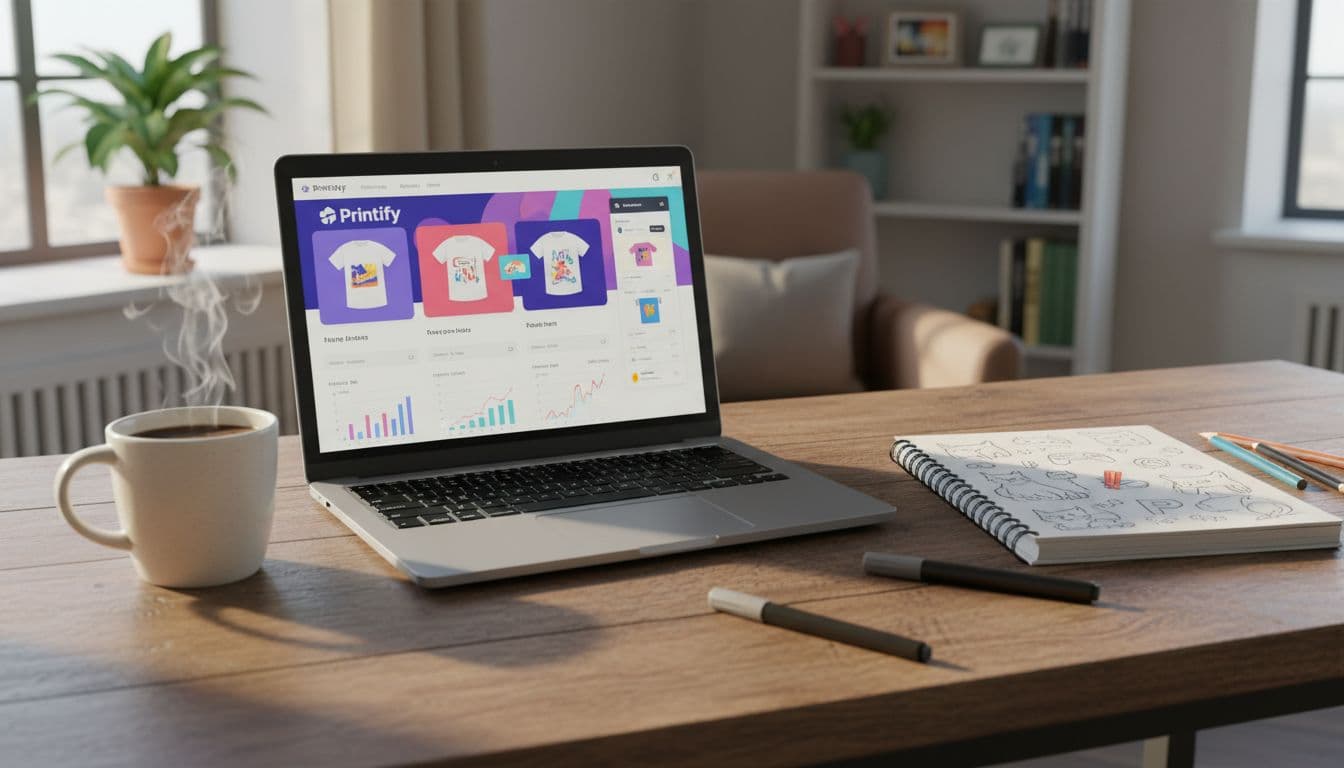
You don’t need a fancy office or a huge budget. A laptop, a design tool, a POD supplier, and a place to sell are enough to launch. That’s a big reason so many people try this from home.
If you’re still learning the basics, this beginner print-on-demand overview gives a useful big-picture look at how the model works.
Compare Printify, Printful, and Gelato in plain English
These three platforms keep showing up for beginners because they are simple to use and well known.
Here’s a quick side-by-side view:
| Platform | Best for | Watch out for | Good first choice if… |
|---|---|---|---|
| Printify | Low base costs, wide product range | Quality can vary by print provider | You care most about margin and product variety |
| Printful | More consistent quality, branding options | Higher product costs | You want a smoother premium feel |
| Gelato | Local production, fast global delivery | Smaller catalog | You want faster shipping across countries |
Printify often works well for Etsy beginners because the catalog is huge and costs can be lower. Printful is a safer pick if you want steadier quality and cleaner branding. Gelato stands out if you want local fulfillment in many regions.
For a broader breakdown of current options, see this 2026 print-on-demand platform comparison.
Pick where to sell first, Etsy for speed or Shopify for control
For most beginners, Etsy is the easier first step. It has built-in traffic, simple setup, and less friction when you’re learning. You can open a shop, list a few products, and start testing faster.
Shopify gives you more control over branding, layout, and customer experience. However, it has a monthly cost, and you need to bring more of your own traffic. That’s harder when you’re brand new.
A smart path is to start on Etsy, learn what sells, then expand to Shopify later. Many beginners do exactly that because it keeps risk low while they gather real buyer data.
Create products that look good, print well, and can make a profit
You don’t need to be an artist to start. In fact, simple usually wins. Clean designs often sell better than complicated ones because buyers can understand them in one glance.
Also, not every product is a good first product. Start with items people already understand and buy often.
Start with simple products and easy design tools
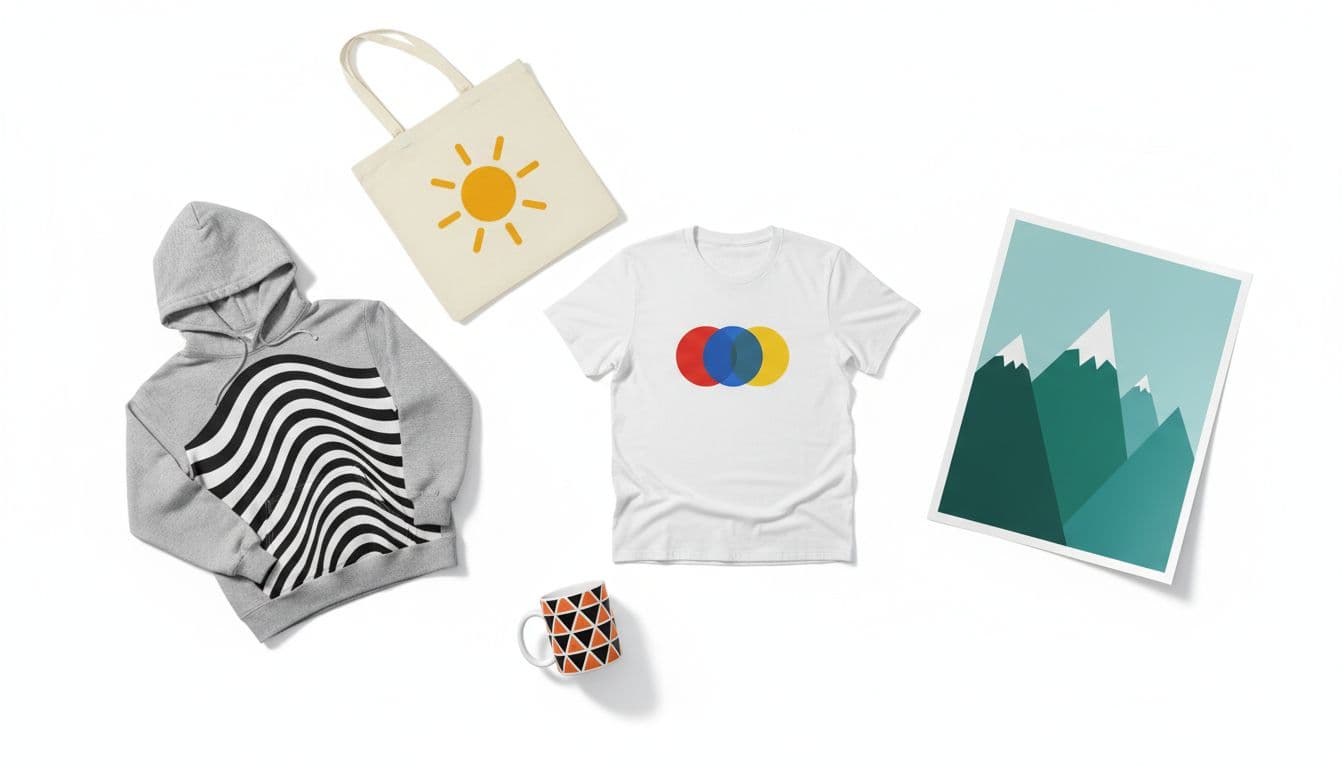
T-shirts, hoodies, mugs, tote bags, and posters are beginner-friendly because demand is already there. They are easy to mock up, easy to gift, and easy to test across niches.
Canva and Adobe Express are fine for starting out. You can create text-based designs, simple icons, and layout-focused graphics without a huge learning curve.

Bold and readable beats busy and confusing. A shirt is not a movie poster. If the message can’t be understood in two seconds, it’s probably too much.
Follow basic print rules so your products do not look cheap
Use high-resolution files, usually 300 DPI, and always check the size guide from your POD supplier. Tiny details can vanish in print, especially on fabric. Thin lines, tiny text, and low-quality files often lead to weak results.
If you use AI art, review it closely before listing anything. Look for weird hands, uneven lines, odd textures, and messy edges. What looks fine on a screen can look sloppy on a real product.
Your first sample is cheaper than your first bad review.
Price for profit, but order samples before you scale
Keep pricing simple. Add up the product cost, shipping, marketplace fees, and the profit you want left over. For example, if a shirt costs $10 to $15 to make, many sellers aim to price it around $25 or more, depending on the niche and brand feel.
Recent 2026 roundups suggest many beginners make about $500 to $2,000 per month after a few months of steady testing, while stronger stores can grow much higher. That’s not a promise, but it’s a realistic reminder that this can work with consistency.
Before you scale, order samples. Check print sharpness, fabric feel, color, and fit. You can’t build trust with guesswork.
Launch your store and get your first sales from home
At this point, you don’t need 100 products. You need a few strong ones. Launching with 5 to 15 focused listings is often enough to learn what buyers respond to.
Clear mockups matter more than many beginners think. Your customer can’t touch the item, so the images do the heavy lifting. Use mockups that fit the niche and make the product easy to picture in real life.
Write listings that are clear, helpful, and easy to find
Good listings answer three things fast: what it is, who it’s for, and why it’s worth buying. A title like “Funny Teacher Mug, Gift for Elementary School Teacher” is much better than something vague like “Cute Coffee Cup.”
Descriptions should sound natural. Mention the product type, the gift angle, and the style. Keep your wording readable. Search terms matter, but stuffed phrases make listings feel robotic.
If you want a wider look at beginner-friendly tools and selling options, this best POD sites in 2026 guide can help you compare what fits your goals.
Use short videos, Pinterest, and social posts to bring in traffic
Social content doesn’t need to be polished. Short clips of your design process, product mockups, gift ideas, or niche jokes can be enough to get attention. Pinterest is especially useful for giftable products and seasonal ideas.
TikTok and Instagram Reels help because buyers like seeing products in context. Social commerce keeps growing, and personalized products are a big part of that. Even a few posts each week can help you build momentum from home.
Avoid the mistakes that stop most beginners too soon
Most failed POD stores don’t fail because the owner picked the wrong font. They fail because the shop never got focused, never got tested, or never got improved.
That sounds blunt, but it’s good news. These are fixable problems.
Do not skip niche research, samples, or quality checks
Broad niches make weak stores. Bad mockups hurt clicks. Poor-quality prints lead to refunds and bad reviews. Skipping samples is like selling a mystery box with your name on it.
Start small instead. Test a handful of products in one niche. Watch which designs get views, favorites, and sales. Then build from there.
Launch faster, track what sells, and improve from real data
Don’t wait for perfect. Perfect is slow, and slow usually means no store at all.
A better plan is to launch, measure, and adjust. If people click but don’t buy, fix pricing or mockups. If nobody clicks, your niche or design may need work. If one product gets traction, make more like it.
In other words, real data beats guessing every time.
Conclusion
A home-based POD business is doable when you keep the path simple. Pick a niche, choose a platform, open a store, list a few strong products, order samples, and promote them with steady effort.
Start small, learn fast, and let buyer response guide your next move. That’s how a beginner turns a simple idea into a real print on demand business from home.