Affiliates don’t need more clicks. We need more sales and leads.
That’s the whole point. I can buy a flood of traffic in one afternoon and still lose money by night. So when I want to buy website traffic that converts, I focus on three things first: the traffic source, the offer-to-page match, and tracking from day one.
Paid traffic can work fast in 2026, but only when I stay practical. Search and social still matter, yet they’re often pricey and stricter for affiliate campaigns. Meanwhile, push, pop, and native traffic still give affiliates room to test, move faster, and spend less upfront. When I pick the right source, send people to a page that makes sense, and track every step, paid traffic stops feeling like gambling.
I start with traffic sources that fit affiliate offers, not just big brand ad platforms
Buying traffic starts with intent. A finance lead form, a mobile app install, and a low-ticket trial won’t all work on the same source.
That’s why I don’t begin with the biggest platforms by default. Google Ads and Facebook Ads can work, but they often cost more and reject more affiliate-style funnels. For many offers, I get better test conditions on affiliate-friendly networks that support push, pop, native, and mobile traffic. In 2026, plenty of buyers still test networks like EZmob, AdMaven, Push.House, AdsCompass, and AdProfex because they move fast and usually allow more direct performance campaigns.
If I want a wider view of what buyers are comparing right now, I check a recent 2026 push and pop source comparison before funding a new account.
Here’s the quick way I think about source fit:
| Traffic type | What I like it for | Main risk |
|---|---|---|
| Push | Fast tests, mobile offers, simple lead gen | Weak creatives get ignored fast |
| Pop | High volume, cheap traffic, broad tests | Easy to waste spend on low-intent clicks |
| Native | Warmer clicks, advertorials, review pages | Needs stronger copy and page flow |
| Search/social | Retargeting, high-intent buyers, clean funnels | Higher costs and stricter rules |
The takeaway is simple: I don’t buy traffic where the brand names are biggest. I buy where the format fits the offer.
Why push, pop, and native traffic can convert better for affiliates
Push, pop, and native work because they can get me live data fast. They also tend to be cheaper to test.
Current 2026 pricing still shows low entry points on affiliate-friendly networks. Push traffic can start at just a few tenths of a cent per click, while pop often runs on very low CPMs. Native varies more, but it still gives me a lower-cost test than many search campaigns. Also, more than half of affiliate visits now come from phones, so mobile-first traffic matters even more.
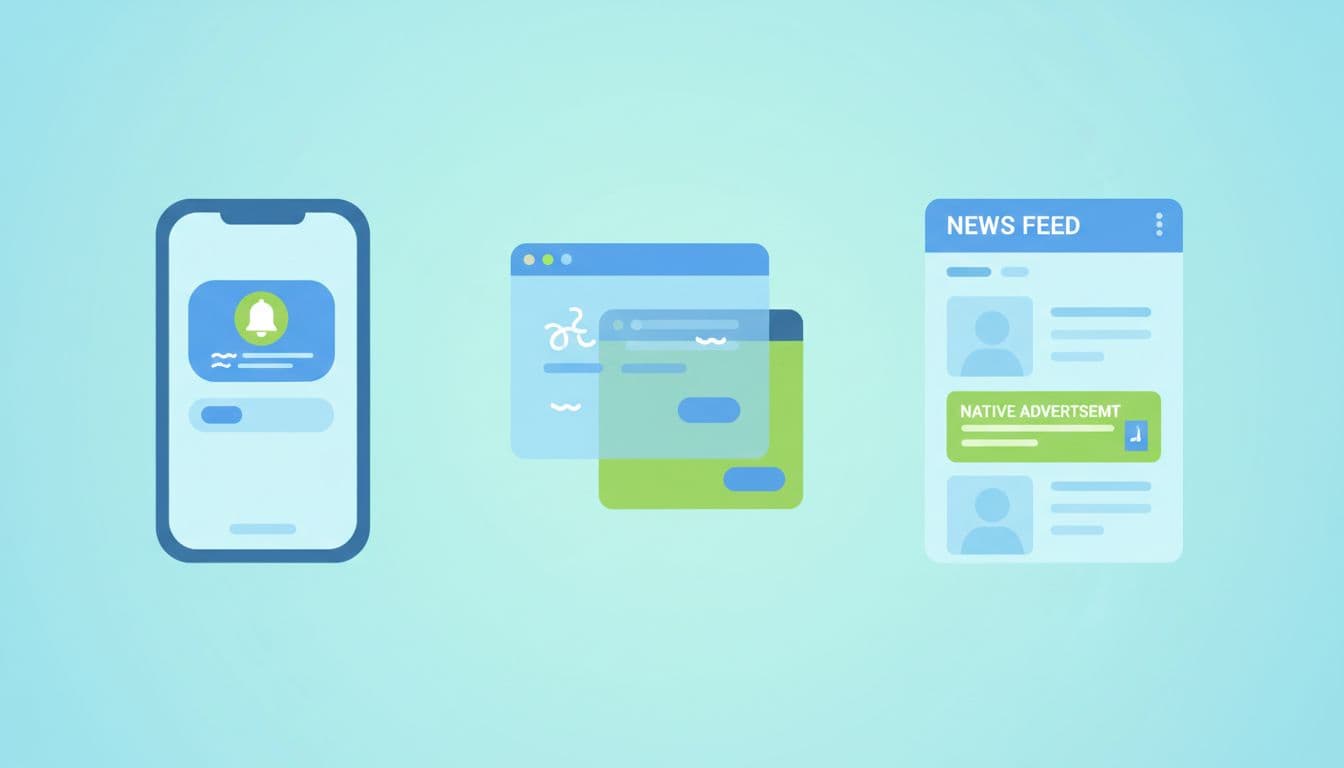
Native often converts best when I need trust first, like with reviews, comparisons, or longer-form presell pages. Push and pop can win when the offer is simple, the action is clear, and I want volume quickly. If I need more ideas, I scan current lists of the best push notification networks in 2026 and compare targeting, deposit size, and traffic quality.
When Google Ads and Facebook Ads still make sense
I still use Google and Facebook in the right spots. They can shine for retargeting, branded terms, broader market tests, and clean offers with good margins.
Still, they demand cleaner funnels, stronger compliance, and more patience. If my offer makes bold claims, uses a rough presell, or lives in a touchy niche, those platforms can become expensive friction. So I don’t force them. I use them when the funnel can support the extra cost and policy pressure.
Before I buy traffic, I make sure the offer and funnel can actually convert
No traffic source can save a weak offer. I learned that the hard way.
If the payout is too low, the page is slow, or the next step feels confusing, I can buy clicks all day and still lose. That’s why I check the economics before I launch. I want a believable promise, enough payout room, and a clear path from ad click to conversion.
A good affiliate offer has clear value, a simple next step, and room for profit
I want the offer to answer one basic thought in the visitor’s head: “Why should I care right now?”
A good offer usually has a clear benefit, proven demand, and a conversion path with little friction. The payout has to leave room for testing, not just perfect-case profit. Recurring commissions or repeat buyers are even better because they give me more breathing room on the front end.
When traffic is paid, margin matters more than excitement. An offer that looks hot in a network dashboard can still fail if refunds are high, approval rates are weak, or the funnel asks for too much too soon.
My landing page has to match the ad, or the traffic dies
Message match is where many campaigns fall apart. If my ad promises a discount, free trial, review, or comparison, the landing page must continue that same story.
I keep the page mobile-first because mobile traffic dominates many affiliate verticals. The page has to load fast, look clean, and point to one main action. I also add trust signals, like simple proof, clear benefits, and fewer distractions. In-page push and native campaigns especially benefit from a smooth, article-like flow, which is why I sometimes review this in-page push network list while planning creative angles.
I test small, track everything, and scale only what proves itself
This is where most of the money is won or lost.
I don’t start with five offers, four countries, and twelve creatives. That sounds busy, but it’s messy. Instead, I start small enough to read the data. Depending on the network and payout, I often begin around $100. Sometimes less is fine. The point is not cheap clicks, it’s useful data.
If I can’t track it, I don’t buy more of it.
I track with sub IDs, postbacks, affiliate network reports, GA4, or a dedicated tracker. In 2026, that matters even more because third-party cookie habits have changed and clean attribution is harder than it used to be. A current roundup of affiliate tracker options for 2026 is worth a look before spend gets serious.
I launch with one offer, one angle, and one traffic source first
Simple setups give me cleaner answers.
I usually pick one offer, one angle, one country, and one device type. Then I choose one format, such as push or native, and let the first test tell me what to fix. That keeps my baseline clear. If the campaign works, I can expand into another GEO, a second angle, or a new source later.
For example, I may run a mobile utility offer on push traffic in the US only, with one landing page angle focused on speed or savings. If that gets clicks but no conversions, I know the problem is likely the page, the offer, or the targeting. If I test everything at once, I learn nothing.
The numbers I watch tell me when to pause, fix, or scale
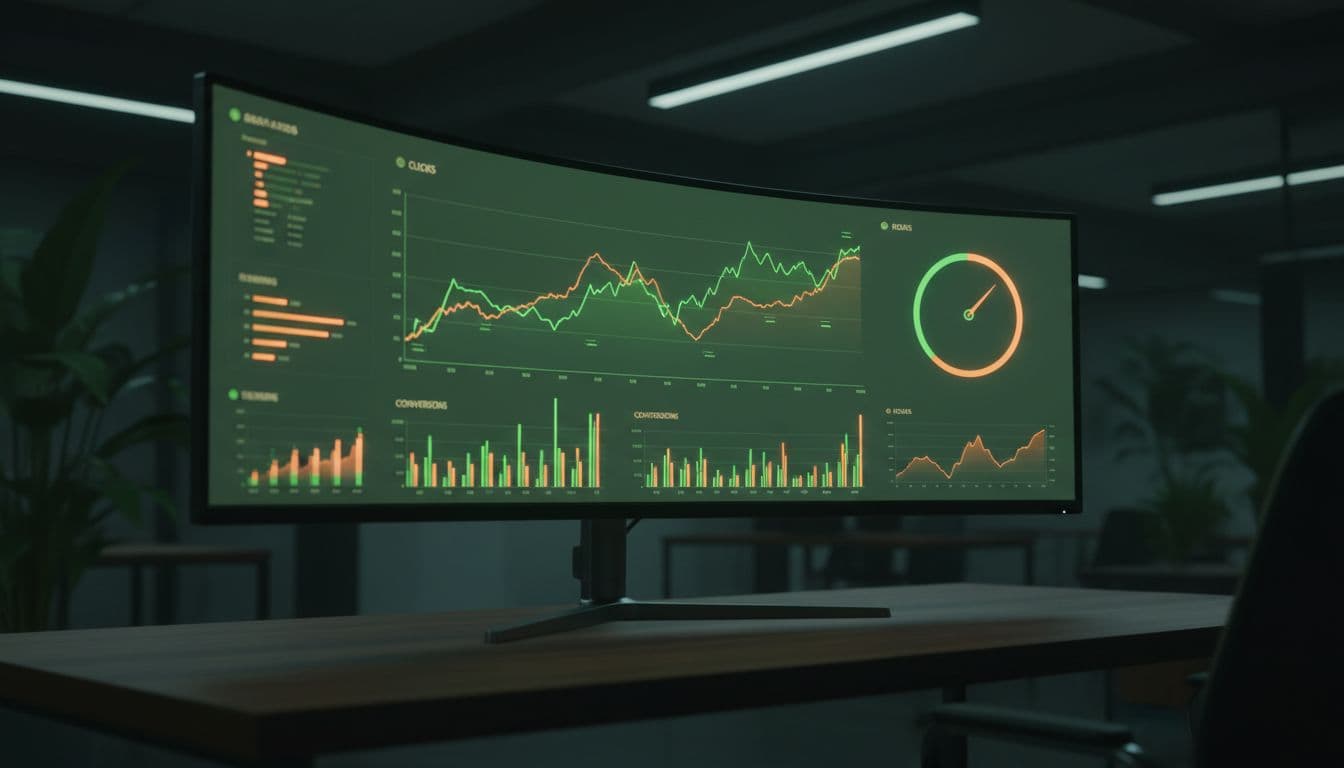
I watch a short list of numbers, not a giant wall of charts.
Click-through rate tells me if the ad gets attention. Cost per click tells me what traffic costs. Conversion rate shows whether the page and offer work. Earnings per click helps me compare traffic quality. Return on ad spend tells me if the campaign deserves more budget. When lifetime value matters, like subscriptions, I factor that in too.
Cheap clicks can fool me. A pop campaign with ultra-low CPC may still lose if the traffic doesn’t buy. On the other hand, a native campaign with higher CPC can win if the conversion rate and average payout are strong.
So I make decisions in stages. First, I pause clear losers. Next, I fix ads or landing pages with weak CTR or weak conversion rate. Then I scale only after the data stays stable.
The biggest reasons paid traffic fails for affiliates, and how I avoid them
Most failed campaigns don’t die because paid traffic is bad. They die because the fit is bad.
That sounds harsh, but it’s freeing too. Once I accept that, I stop chasing magic traffic and start fixing what matters.
Cheap traffic is not a win if it brings the wrong people
Low-cost clicks look great in a dashboard. They can wreck a campaign in real life.
If the placement quality is poor, the targeting is sloppy, or the audience has no reason to care, cheap traffic becomes expensive traffic fast. So I don’t chase the lowest bid first. I test better placements, cleaner device targeting, and stronger GEO choices before I call a source “bad.”
Cheap traffic is only a bargain when it converts.
Relying on one traffic source is risky, so I build a safer mix
A single winning source can dry up fast. Prices rise, placements burn out, or accounts get limited.
Because of that, I treat every winner like a starting point, not a permanent home. Once a campaign works on one network, I look for a second source or format that can carry the same angle. Maybe a push winner expands into native. Maybe a native advertorial gets a retargeting layer on Facebook. That kind of spread gives me more stability and keeps one platform from controlling my whole month.
In the end, I don’t try to buy the most traffic. I try to buy the right traffic for the right offer and page. My process stays simple: pick an affiliate-friendly source, build a landing page that matches the ad, test with a small budget, track every conversion, and scale only the winners. That’s how I buy website traffic that converts without burning cash on noise. Smart action beats blind spending every time.