
Making money online sounds exciting, right up until I hit the part where I had to figure things out alone. That’s where affiliate marketing groups on WhatsApp started to feel useful. They gave me a place to spot ideas, see what offers people were talking about, and learn faster than I could by scrolling random posts all day.
Still, not every group helps. Some are gold mines for tips and honest feedback. Others are link dumps with no trust, no rules, and no real value. As of April 2026, I’m seeing more serious marketers move toward smaller private groups instead of noisy public ones, because the chat stays more focused.
If I want better results, I have to pick the right groups, join carefully, and use them like a real person, not a bot with a commission link.
What affiliate marketing groups on WhatsApp actually do for you
When I first joined a few groups, I expected hype. What I found was more practical. Good groups help me stay close to what people are promoting, what angles are working, and which offers are burning out. Because WhatsApp messages get seen fast, updates often reach me sooner than they do in blogs or forums. That speed matters, but only when the group is built on trust and relevance.
I’ve found helpful background reading in Zixflow’s guide to WhatsApp affiliate marketing and Cuelinks’ walkthrough of earning via WhatsApp. I also keep an eye on WATI’s broader WhatsApp marketing content, because message timing and reply quality matter more than raw volume.

You get ideas, support, and real-time offer updates
An active group can feel like a busy street market. One person shares a limited-time deal. Another posts a promo angle that got replies. Someone else warns that an offer stopped converting.
That flow helps me in simple ways. I can catch fresh product ideas, see what niche people are buying in, and test messages faster. If I’m in a fitness group, I’ll often see supplement offers, coaching funnels, or app promos before they become old news.
The best part is feedback. If I’m unsure about a message, I can ask, “Does this sound too pushy?” That kind of quick reality check saves time.
The best groups help you learn, not just dump links
A healthy group teaches. A weak group shouts. I can usually tell the difference within a day.
In a good group, admins set rules. Members answer beginner questions. People explain why something worked, not only that it worked. In a bad group, the chat looks like a junk drawer full of raw links, fake urgency, and course pitches.
If a group makes me feel rushed, pressured, or confused, I leave fast.
That one habit saves me more time than any traffic trick.
How you can find and join the right WhatsApp groups safely
Finding groups isn’t hard. Finding useful ones is the hard part. I usually start with Google, then check YouTube descriptions, Reddit threads, Facebook communities, Telegram channels, and affiliate forums. I also look at network-related communities, because some offer discussions spin out from affiliate platforms and niche pages.
Public group lists still exist, and some get updated often. For example, I’ve seen fresh invite collections on Whatinfotech’s online earning groups page, Whtsgrouplink’s affiliate group list, and Whatagrouplinks’ affiliate marketing invite roundup. Those pages can help me discover communities, but I never treat a public invite list like a quality stamp.

Where to look for active groups without wasting time
Big member counts can fool me. A group with 900 people may be dead, while one with 120 active members can be packed with useful chats.
So I look for niche fit first. If I promote software, finance, beauty, or online tools, I want a group where people already care about that topic. I also check activity. Are members talking daily? Do admins post rules? Are people sharing outcomes, not only promises?
Affiliate forums can help me judge quality before I join anything. Even a page like AffiliateFix’s community rules is useful, because it shows what a moderated affiliate space should feel like. Clear rules usually mean better discussions.
Here’s the quick filter I use before staying in any group:
| Solid group signs | Risky group signs |
|---|---|
| Clear rules pinned | No rules at all |
| Admins remove spam | Admins never show up |
| Real discussion | Nonstop promo blasts |
| Niche-focused chat | Random money claims |
When I compare groups this way, weak ones stand out fast.
The safety checks to do before you join or post anything
I always observe before I speak. That means I read the rules, scan recent messages, and watch how people treat each other. If the first thing I see is “Buy my course now” or “DM me your number for secret earnings,” I’m out.
I never pay to enter a basic WhatsApp group. That’s a bright red flag. I also avoid groups that ask for personal details, push shady shortened links, or promise guaranteed income. Honest affiliate marketing never needs mystery.
Another warning sign is zero moderation. If spam sits there all day, the group will turn into noise. I’d rather join one slow, clean group than ten chaotic ones.
How to use affiliate marketing groups on WhatsApp without looking spammy
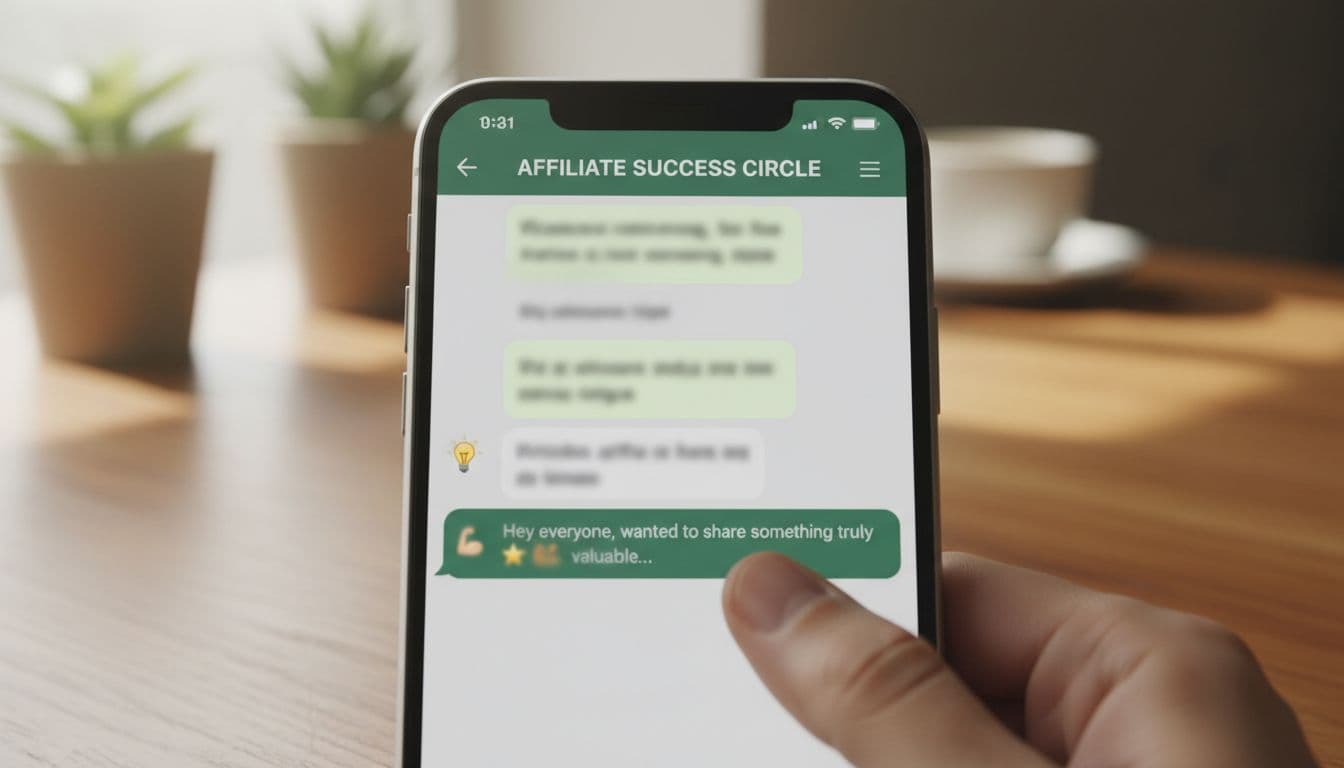
Once I’m inside a good group, I treat trust like my first sale. Before anyone clicks my link, they have to believe I’m useful, honest, and worth listening to. That’s why I don’t enter a chat and drop offers right away. I start by answering questions, sharing small tips, and reacting to what people are already talking about.
That matches what I’ve seen in Gallabox’s guide to WhatsApp affiliate marketing. Short, clear, human messages work better than long sales paragraphs. I also borrow ideas from WATI and Hello Charles style advice, because both push better engagement through simple replies and relevant timing.
Lead with helpful content, then share links in a natural way
I like a simple value-first ratio. For every promo I share, I try to add several non-promo messages first. That could mean a quick tip, a warning about a bad landing page, or a short example of a message that got replies.
If someone asks for a tool recommendation and I use one with an affiliate offer, that’s a natural opening. I’ll explain why I like it, who it fits, and where it falls short. Then I’ll disclose that the link is an affiliate link. That honesty matters.
I also use WhatsApp Status to test ideas softly. A short result, a screenshot, or a plain note can attract interest without hijacking the whole group. If someone replies, I move the chat into private messages, but only after they show interest. Consent keeps things clean.
Use simple formats that get attention fast
Long blocks of text die fast in chat apps. I’ve had better luck with short text, one screenshot, a quick demo clip, or a 15 to 20-second voice note.
Voice notes work well because they sound human. A screenshot works because it gives proof without forcing people to read a wall of copy. Short videos help when I need to show how an offer works, but I keep them tight.
Here’s the tone I aim for:
Helpful first, clear second, promotional last.
That means no fake hype, no giant claims, and no random links dropped into unrelated chats. If the conversation is about side hustle tools, I share something that fits that topic. If it doesn’t fit, I stay quiet.
Mistakes that can get you ignored, removed, or banned
Most beginners don’t fail because the offer is bad. They fail because their behavior makes people tune out. I’ve done enough testing to know that posting links too early is one of the fastest ways to get ignored.
Copy-paste messages are another killer. When I send the same text to every group, it feels lazy. People notice. The same goes for hiding affiliate links, adding people without consent, or promoting products that don’t match the group’s niche.
Bad group habits that kill trust fast
Over-posting burns goodwill. So does ignoring rules. If an admin says no self-promo on weekdays and I post anyway, I’m telling the group I only care about myself.
I also avoid spammy tools and scraping tactics. Some 2026 discussions online push bulk outreach and contact exporting from groups. I don’t touch that. It annoys users, raises complaint risk, and can hurt my account over time.
Smart ways to protect your account and your long-term income
I keep my approach simple. I get opt-ins where I can. I disclose affiliate relationships. I track which messages bring replies, not only clicks.
Most importantly, I don’t build my whole income on one app. WhatsApp can be great, but it shouldn’t be my only bridge to buyers. I like having email, a basic website, or another traffic source in the mix. That way, one account issue doesn’t wipe out all my effort.
The smart play is steady trust, not loud volume.
The next move is simple. I’d join one or two solid groups, stay quiet for a bit, and watch how the best members talk. I’d save useful ideas, note what gets replies, and test one helpful promotion at a time.
That’s how affiliate marketing groups on WhatsApp start paying off. Not through blasting links, but through patience, relevance, and trust. When I treat the group like a real community, the results usually get better.