
Being quiet has never looked more useful. I’ve found that some of the best extra income ideas reward focus, patience, and solo work, not nonstop talking.
If you’re an introvert, the usual side hustle advice can feel loud and exhausting. You don’t need to chase cold calls, live sales, or crowded events to make money. In 2026, many strong options are remote, skill-based, and built around low social pressure, flexible hours, and text-first communication.
That’s why I think the best side hustles for introverts aren’t the flashiest ones. They’re the ones you can keep doing without draining yourself.

What makes a side hustle work well for introverts?
When I size up a side hustle, I don’t start with income alone. I start with energy. A hustle can look great on paper and still be a bad fit if it asks for constant calls, customer drama, or a smile on demand after a full workday.
For introverts, the best fit usually has five traits. It keeps customer contact low, gives me quiet work, lets me control my schedule, costs little to start, and grows at a pace I can handle. That last part matters more than people admit. A side hustle should feel like a path, not a treadmill.
In 2026, that fit is easier to find because remote work tools are better, AI helpers save time, and more buyers are comfortable with async communication. I can write, design, edit, or sell without being “on” all day.
If you want a wider view of what’s working now, Shopify’s 2026 side hustles for introverts gives a useful snapshot of quiet, online options.
Look for work that fits your energy, not just your wallet
I’ve learned that high pay can hide a high energy cost. A side hustle that brings in fast cash but leaves me drained by Friday usually doesn’t last.
That’s why I match the work to my comfort with communication, creativity, and routine. If I like writing but hate phone calls, freelance content makes more sense than coaching. If I enjoy patterns and polishing, editing or design may feel easier than sales.
The best side hustle is the one I can repeat without dreading it.
Start with simple systems that keep stress low
Small systems make a huge difference. I like set work hours, canned replies, intake forms, and clear project steps because they reduce mental clutter.
Async messaging helps, too. When I can answer by email instead of hopping on a call, I stay calmer and do better work. Templates also save time. A short proposal, a welcome message, and a project checklist can turn a messy hustle into something manageable.
Best side hustles for introverts you can start from home
The strongest options right now aren’t random gigs. I’m seeing steady demand for remote work that solves clear problems, especially writing, editing, design, and digital products. These side hustles for introverts work because they lean on skill, not showmanship.
Freelance writing and blogging for quiet, focused work
Freelance writing still stands out because most of the work happens alone. I can write blog posts, email newsletters, product descriptions, case studies, or niche articles from home, often with nothing more than a laptop and a solid brief.
Communication is usually simple. Many clients use email, Slack, or freelance platforms, so I don’t need to spend hours talking. That makes writing one of the easiest side hustles for introverts to test while keeping a day job.

In 2026, there’s also a useful twist. Businesses still need human-written content, but many now also need people to clean up rough AI drafts. That creates room for writers and editors who can improve tone, structure, and accuracy. Even better, I can start with one or two samples instead of a huge portfolio.
Blogging takes longer, but I like it for the same reason I like gardening. I plant once, tend it steadily, and results build over time. A blog can later earn through affiliate links, sponsored posts, or digital product sales. For another take on why this works well for quiet people, this piece on writing online for introverts lines up with what I’ve seen.
Video editing, graphic design, and web design for creative introverts
Creative service work is a strong fit when I want clear tasks and deep focus. Video editing, graphic design, and web design all let me work in long, quiet blocks. I can take a brief, make the thing, revise it, and send it back. That rhythm feels clean and manageable.
These jobs also scale well. A beginner might start with social media graphics, simple landing pages, or short-form video edits. Later, that can grow into brand packages, YouTube editing, or full website builds.
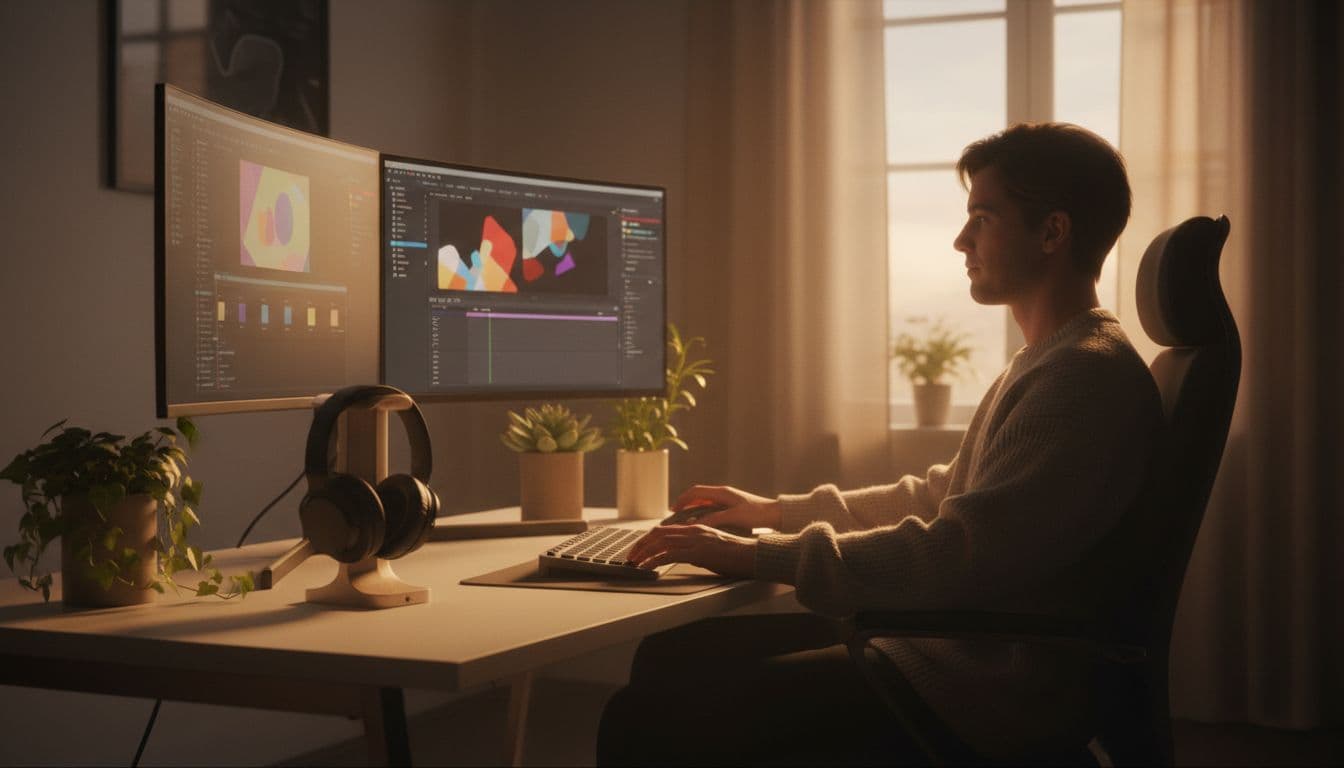
The tools are friendlier now, too. Canva helps with fast graphics, Figma is great for web layouts, and DaVinci Resolve gives serious editing power for free. AI helpers can speed up rough drafts, captions, color ideas, and layout suggestions. Still, taste and judgment matter, and that’s where good creatives stand out.
Starting isn’t hard, but getting paid well takes proof. I’d begin with three samples, one simple offer, and a price I can say without flinching. Over time, these services can reach strong monthly income because businesses always need better visuals.
Selling digital products or print-on-demand designs
This is one of my favorite low-pressure models because I can make something once and sell it many times. That changes the whole mood of the work. Instead of chasing every new client, I build assets that keep working while I sleep.
Digital products can be simple. Think planners, trackers, budget sheets, templates, ebooks, worksheets, or Notion-style systems. If I enjoy design but don’t want client work, this route gives me more control. Print-on-demand works the same way, except I create a design for shirts, mugs, or posters and let a service handle the printing and shipping.
Platforms like Etsy and Gumroad make it easier to test ideas without a big upfront cost. I still need decent product photos, strong titles, and clear descriptions, but I don’t need a warehouse or a sales team. Quiet people often do well here because product creation rewards patience and detail.
This model usually starts slower than freelancing. Still, I like its ceiling. A useful template or printable can keep earning for months. Side Hustle Nation’s list of best side hustles for introverts in 2026 also points to digital products as a strong low-contact option, and that matches what I’m seeing.
How you can choose the right side hustle without getting overwhelmed
Too many options can freeze me faster than too few. When every idea sounds possible, I need a filter.
Pick based on your skills, your time, and your comfort with people
I use three filters. First, what do I already know how to do? Writing, editing, spreadsheets, design, and research all have side-hustle value. Starting with an existing skill shortens the path to first income.
Next, I look at time. If I only have five hours a week, service work may beat content-heavy projects. If I have more time upfront, digital products may be worth it. Last, I’m honest about people energy. Some introverts are fine with client messages but hate live calls. Others don’t mind one call a week but dislike ongoing chats. That detail matters.
Choose one path, test it for 30 days, then adjust
I don’t try five things at once. That usually creates stress, not income.
Instead, I pick one path and run a short test. For 30 days, I make one offer, one sample, or one product line. Then I track three things: how much I earned, how hard it felt, and whether I want to keep going. If the money is low but the work fits, I improve the offer. If the work feels wrong, I switch without guilt.
Simple tips to make your introvert-friendly side hustle pay off
A good idea helps, but a calm setup helps more. I’ve noticed that side hustles for introverts work best when I remove friction early.
Use text-first communication and clear boundaries
Written communication protects my energy. Email, contact forms, project briefs, and FAQs cut down on the back-and-forth that makes simple work feel heavy.
I also like canned replies for common questions, especially about pricing, timelines, and revisions. That doesn’t make me cold. It makes me consistent. If I offer a service, I can even say upfront that I prefer written communication. Most clients won’t mind, and the ones who do may not be my best fit anyway.
For more ideas in this lane, this roundup of low-interaction side hustles supports the same point: quiet work gets easier when the setup respects how you operate.
Build proof fast with small wins and steady habits
I don’t need a giant launch. I need one proof point. That could be one strong sample, one polished Etsy listing, or one clear service page.
After that, I focus on small wins. I ask for an early review. I improve weak spots. I track income in a simple spreadsheet. Many people first hit a few hundred dollars a month, then grow from there. That’s normal. A side hustle is less like a fireworks show and more like a campfire. It starts small, then gets hotter if I keep feeding it.
Quiet doesn’t mean invisible. It means I build in a way I can sustain.
Being introverted isn’t a roadblock to extra income. In many cases, it’s an edge. Focus, patience, and comfort with solo work are a great match for writing, creative services, and digital products.
If I were starting this week, I’d choose one low-pressure option and take one small step today. Make the sample, open the shop, or write the offer. Quiet work can pay well, and it often starts with one calm decision.